THE NEW HIGHWAY — THE BEGINNING OF A NEW ECONOMIC HISTORY
How the New Tashkent–Samarkand Highway Could Transform Uzbekistan’s Urban Development, Trade and Economy
Author: Avazbek ABDULKHAEV
Sometimes history is changed by a decision. Sometimes, it is changed by a road.
Uzbekistan is entering one of those historic periods today.
At first glance, the new highway connecting Tashkent and Samarkand may appear to be simply a major transportation infrastructure project.
But its real significance is much greater.
This highway will not only connect:
Tashkent with Samarkand.
It has the potential to connect:
cities with markets,
production with consumers,
regions with investment,
people with employment,
and Uzbekistan with Central Asia.
For this reason, what we are witnessing today is not simply the construction of a new highway.
We may be witnessing the beginning of a new economic geography for Uzbekistan.
THE ROAD — ONE OF THE OLDEST ENGINES OF ECONOMIC DEVELOPMENT
Throughout human history, major economic centers have emerged around transportation and trade routes.
Samarkand, Bukhara, Tashkent and many other cities flourished along the historic Silk Road.
Where caravans travelled:
- markets emerged;
- crafts developed;
- accommodation centers appeared;
- populations grew;
- new settlements were established.
Modern highways represent a new form of the same historical process.
The “caravans” of today are:
- trucks;
- buses;
- private vehicles;
- logistics companies;
- e-commerce networks;
- investment capital.
Therefore:
A road is the circulatory system of an economy.
BEHIND 282 KILOMETERS — A MUCH LARGER TRANSFORMATION
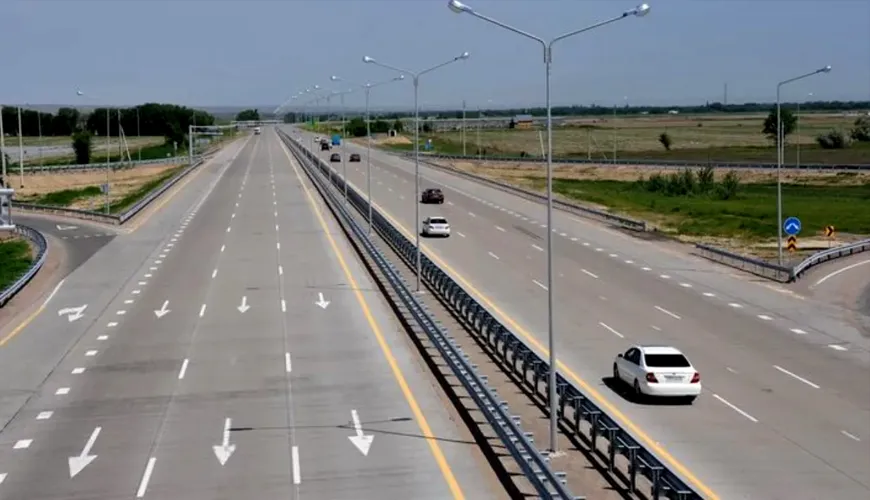
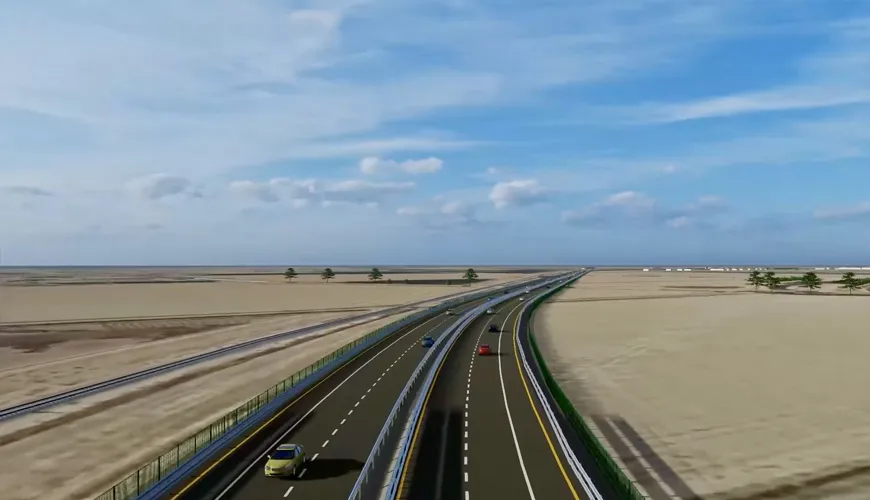
The new Tashkent–Samarkand highway is a major infrastructure project extending approximately 282 kilometers.
It connects the regions of:
Tashkent → Syrdarya → Jizzakh → Samarkand.
But its real economic length is not 282 kilometers.
Its economic influence can extend much further:
Tashkent → Syrdarya → Jizzakh → Samarkand → Central Asia.
The economic impact of the highway will not end where the asphalt ends.
In many respects, that is where the development process will begin.
THE MOST VALUABLE RESOURCE — TIME
The most important economic product of a modern highway is not asphalt.
It is:
TIME.
When travel between Tashkent and Samarkand becomes significantly faster, the benefit is not limited to passenger convenience.
It means:
- trucks can make more trips;
- goods can reach markets faster;
- business meetings become easier;
- tourism can expand;
- labor mobility can increase;
- logistics costs can decline.
In economics, time is money.
Therefore:
Saving one hour across millions of journeys can create enormous economic value.
A NEW ROAD — A NEW MARKET
Imagine a manufacturer in Jizzakh delivering products to Tashkent faster.
Imagine an agricultural producer in Syrdarya reaching the markets of Tashkent or Samarkand more efficiently.
Imagine a company in Tashkent working with a factory in Jizzakh as part of one integrated supply chain.
Imagine hotels in Samarkand receiving more visitors from Tashkent.
All of these processes are connected.
The result is simple:
THE ROAD EXPANDS THE MARKET.
And a larger market creates opportunities for investment, production and entrepreneurship.
TASHKENT DOES NOT HAVE TO REMAIN THE ONLY ECONOMIC CENTER
For many years, Uzbekistan's economy has had a strong centralized structure.
Tashkent has been the country's major center for:
- finance;
- business;
- government;
- trade;
- education;
- technology;
- services.
But the modern economic model is increasingly based on polycentric development — a system in which several interconnected cities and economic centers grow together.
The Tashkent–Samarkand corridor could provide the backbone for such a system in Uzbekistan.
SYRDARYA — FROM TRANSIT REGION TO ECONOMIC CENTER
The new highway could fundamentally change the economic role of Syrdarya.
Today, the region is often viewed simply as a territory between Tashkent and Samarkand.
Tomorrow, it could become a major center for:
LOGISTICS + INDUSTRY + AGRO-PROCESSING + TRADE
For an investor, several questions are critical:
Can I reach the market efficiently?
Can I move my products quickly?
Can I access labor and raw materials?
Improved highway connectivity can strengthen the answer to all three questions.
JIZZAKH — A NEW GATEWAY FOR INDUSTRY AND TECHNOLOGY
Jizzakh has the potential to become one of the major economic nodes along the corridor.
Future development could include:
- industrial parks;
- logistics centers;
- export-oriented companies;
- agro-processing clusters;
- technology manufacturing;
- distribution centers;
- B2B trade hubs.
Jizzakh could therefore evolve from simply being a region along a transport route into:
A NEW PRODUCTION AND LOGISTICS CENTER OF UZBEKISTAN.
SAMARKAND — A NEW GATEWAY TO TOURISM
Samarkand has a different economic strength.
Its greatest assets are:
history + culture + tourism.
As accessibility from Tashkent improves, the number of:
- international tourists;
- domestic travelers;
- business visitors;
- investors;
- conference participants
could increase.
This creates a powerful economic chain:
Hotels → Restaurants → Retail → Transport → Culture → Services
The highway therefore represents more than transportation infrastructure for Samarkand.
It can become:
A NEW ARTERY OF THE TOURISM ECONOMY.
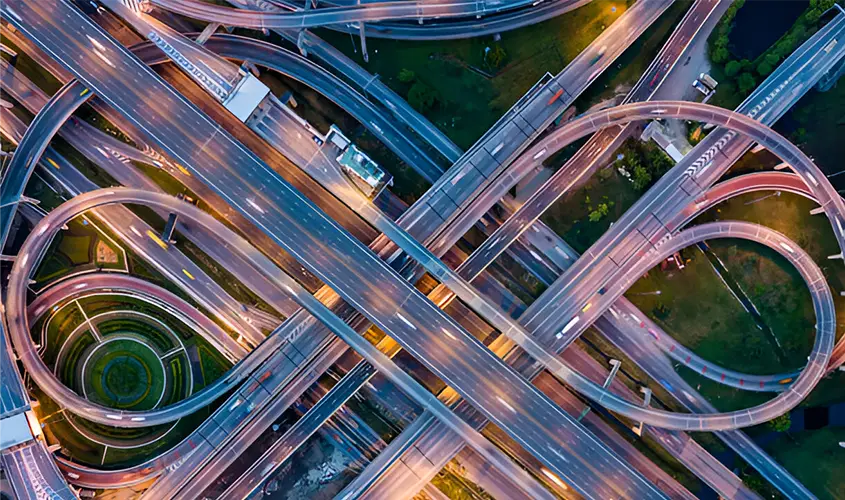
NEW CITIES COULD EMERGE ALONG THE HIGHWAY
Around the world, many cities have developed around major transportation corridors.
Today, there may be open land beside the highway.
Tomorrow, that same land could contain:
- logistics centers;
- hotels;
- shopping centers;
- business districts;
- factories;
- housing;
- schools;
- hospitals;
- parks.
The development chain is straightforward:
ROAD → INVESTMENT → JOBS → POPULATION → CITY
This is one of the strongest mechanisms of urbanization.
BUT THIS PROCESS CANNOT BE LEFT UNPLANNED
There is also a major risk.
Without proper spatial planning, highway development can produce:
- uncontrolled commercial development;
- random construction;
- excessive access points;
- congestion;
- environmental problems;
- fragmentation of agricultural land.
Therefore, the construction of the highway should be accompanied by:
A NEW REGIONAL DEVELOPMENT MASTER PLAN.
THE ECONOMIC ZONES ALONG THE HIGHWAY
The areas surrounding the highway could be strategically planned according to different functions.
1. LOGISTICS BELT
Warehouses, distribution centers, freight terminals and cold-chain facilities.
2. INDUSTRIAL BELT
Manufacturing, export industries and technology production.
3. COMMERCIAL BELT
B2B centers, retail, restaurants and services.
4. TOURISM BELT
Hotels, resorts, cultural centers and gastronomic destinations.
5. URBAN DEVELOPMENT BELT
Housing, offices and new urban centers.
6. GREEN BELT
Parks, ecological corridors and sustainable infrastructure.
This approach transforms a highway from a simple transport facility into:
A DEVELOPMENT CORRIDOR.
A NEW ECONOMIC GEOGRAPHY
Imagine the future economic map.
At one end:
TASHKENT
At the other:
SAMARKAND
Between them:
SYRDARYA + JIZZAKH
These regions could increasingly function as:
ONE INTEGRATED ECONOMIC SYSTEM.
Each region could specialize according to its competitive strengths:
TASHKENT
Finance + Technology + Business Services
SYRDARYA
Logistics + Agro-Industry + Manufacturing
JIZZAKH
Industry + Technology + Export
SAMARKAND
Tourism + Culture + Services + Trade
This is the foundation of a:
NEW ECONOMIC GEOGRAPHY.
THE HIGHWAY AND INVESTMENT
For investors, good roads mean good infrastructure.
But even more important is:
MARKET ACCESS.
An investor asks:
“Where will I sell my products?”
“How will I bring in raw materials?”
“How will I export?”
“How will my employees reach the workplace?”
“What will logistics cost?”
The new highway can influence all of these factors.
Therefore, creating:
INVESTMENT DEVELOPMENT ZONES
along the corridor could generate substantial economic value.
THE HIGHWAY AND EXPORTS
In today's global economy, export competitiveness depends on more than product quality and price.
It also depends on:
speed + reliability + logistics cost.
The highway can strengthen the chain:
PRODUCTION → STORAGE → LOGISTICS → MARKET → EXPORT
This can improve the competitiveness of Uzbek companies in regional and international markets.
THE MODERN SILK ROAD
Centuries ago, the Great Silk Road connected:
trade + culture + cities.
Modern economic corridors connect:
production + logistics + technology + capital + tourism.
In this sense, the Tashkent–Samarkand corridor could become an important component of Central Asia's modern transport and economic network.
It is not the historical Silk Road itself.
But its economic philosophy is remarkably similar:
Where there is connectivity, there is exchange. Where there is exchange, there is economic development.
SMART HIGHWAY — THE ROAD OF THE FUTURE
The new highway should not be limited to concrete and asphalt.
It should become a:
SMART HIGHWAY.
Future infrastructure could include:
- artificial intelligence;
- cameras and sensors;
- real-time traffic management;
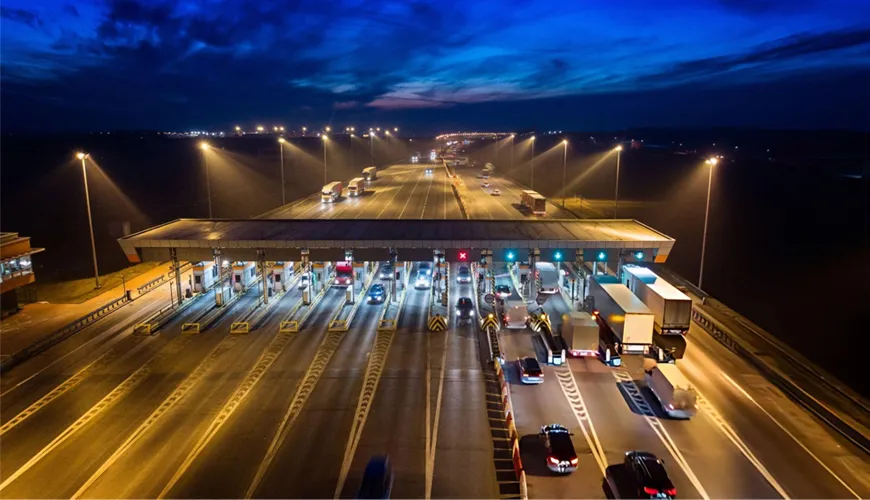
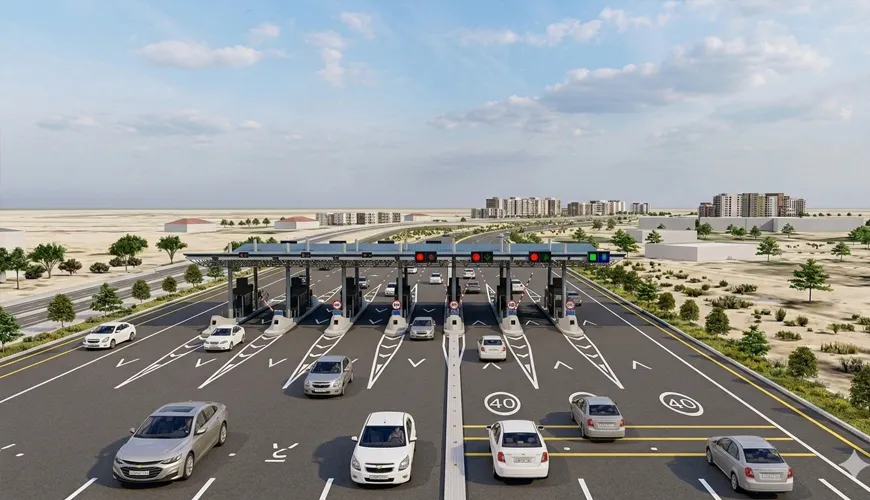
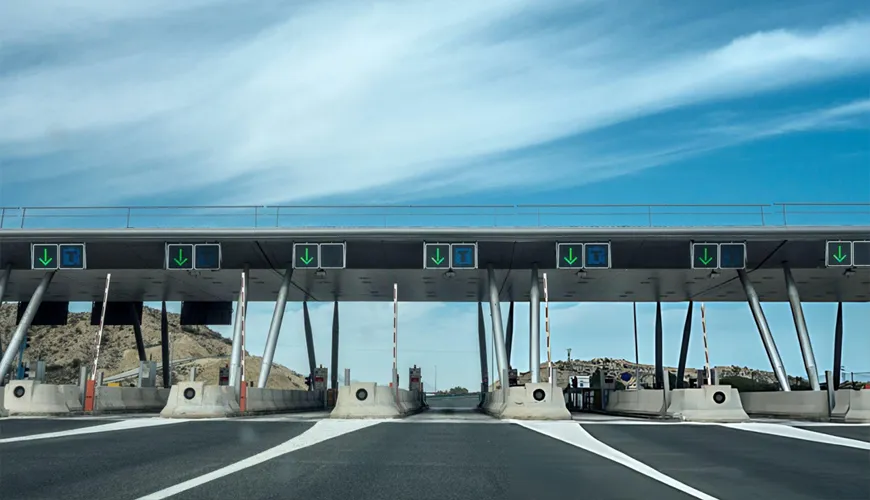
- electronic tolling;
- automated safety systems;
- weather monitoring;
- emergency response systems;
- digital logistics;
- electric vehicle charging.
The highway would then become a 21st-century digital transportation platform.
THE ELECTRIC MOBILITY ERA
As electric vehicles become increasingly widespread, the new highway could also develop into:
THE TASHKENT–SAMARKAND EV CORRIDOR.
Modern service centers could be established at strategic intervals, providing:
- fast charging;
- restaurants;
- supermarkets;
- hotels;
- medical services;
- vehicle maintenance;
- parking.
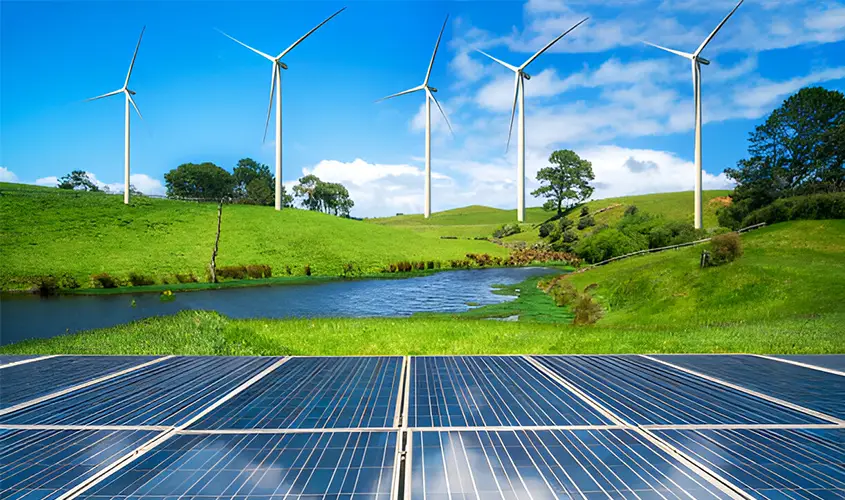
In the future, some of these facilities could operate through:
Solar Energy + Battery Storage + EV Charging
systems.
THE HIGHWAY AND NEW JOBS
The economic impact of the highway will not end with construction employment.
Once operational, the corridor could support new businesses in:
- logistics;
- hospitality;
- restaurants;
- warehousing;
- manufacturing;
- retail;
- tourism;
- technology services.
In other words:
One major highway can create thousands of new economic opportunities.
THE MOST IMPORTANT CHANGE — HUMAN MOBILITY
The highway does not only move vehicles.
It moves people.
A student could study in another city.
A professional could work in another region.
An entrepreneur could meet a client in another city and return the same day.
A tourist could visit several destinations during one trip.
Thus:
TRANSPORT MOBILITY → ECONOMIC MOBILITY.
And economic mobility creates greater social and economic opportunity.
HOW SHOULD NEW CITIES BE PLANNED?
If new urban centers emerge along the corridor, they should not be designed simply as housing projects.
The formula should be:
JOBS + EDUCATION + HEALTHCARE + TRADE + HOUSING + TRANSPORT
And the first priority should be:
JOBS FIRST.
Then:
POPULATION.
This is how genuine economic cities can be created rather than simply residential satellite settlements.
THE TASHKENT–SAMARKAND MEGAREGION
In the future, the relationship between Tashkent and Samarkand should perhaps be understood as more than a connection between two cities.
It could become:
THE TASHKENT–SAMARKAND MEGAREGION.
A megaregion connecting:
- millions of people;
- industrial enterprises;
- logistics centers;
- universities;
- tourism destinations;
- commercial districts;
- new cities.
Such a system could become one of Uzbekistan's most important engines of economic growth.
WHAT DOES THIS PROJECT MEAN FOR UZBEKISTAN?
This project is:
not only a new road.
It is:
a new logistics system.
A new trade geography.
A new investment map.
A new urban development model.
A new tourism corridor.
A new industrial geography.
A new labor market.
And, most importantly:
A NEW ECONOMIC HISTORY.
WE ARE WRITING HISTORY TODAY
We often think of history as something that happened in the past.
But history is created every day.
The road being built today may influence the lives of millions of people tomorrow.
Land that is empty today may become a factory tomorrow.
A small settlement today may become an economic center tomorrow.
An ordinary interchange today may become the center of a new city tomorrow.
That is why we should not look at the new highway simply as a:
“road.”
We should see it as:
A PLATFORM FOR THE ECONOMY OF THE FUTURE.
MY PROPOSAL
A dedicated:
“TASHKENT–SAMARKAND ECONOMIC DEVELOPMENT CORRIDOR”
program should be established around the highway and incorporated into a long-term 2030–2040 regional economic and spatial development strategy.
The strategy could be built on eight pillars:
1. SMART HIGHWAY
Intelligent transportation infrastructure.
2. SMART LOGISTICS
An integrated logistics network.
3. SMART INDUSTRY
Export-oriented manufacturing.
4. SMART CITIES
New urban development centers.
5. SMART TRADE
B2B and international trade infrastructure.
6. SMART TOURISM
A Tashkent–Samarkand tourism corridor.
7. GREEN INFRASTRUCTURE
Sustainable and environmentally responsible development.
8. INVESTMENT CORRIDOR
A new investment platform for international capital.
CONCLUSION
At first glance, the new Tashkent–Samarkand highway is approximately 282 kilometers of transportation infrastructure.
But its real economic value cannot be measured in kilometers.
Its real value will be measured by:
how much time it saves,
how much investment it attracts,
how many businesses it enables,
how many jobs it creates,
how much it increases exports,
and
how many new economic centers and cities it helps develop.
Therefore:
Today, we are not simply building a new road from Tashkent to Samarkand.
We are building a development spine capable of integrating Tashkent, Syrdarya, Jizzakh and Samarkand into a new economic geography.
Perhaps, several decades from now, historians will look back at this period and write:
“The new economic geography of Uzbekistan began to take shape with the construction of this highway.”
Because sometimes the history of a country is changed not only by laws, factories or cities.
SOMETIMES, IT IS CHANGED BY ROADS.
A new highway — new opportunities.
A new corridor — a new economy.
A new economy — a new Uzbekistan.
The history has not yet been written.
WE ARE WRITING IT TODAY.